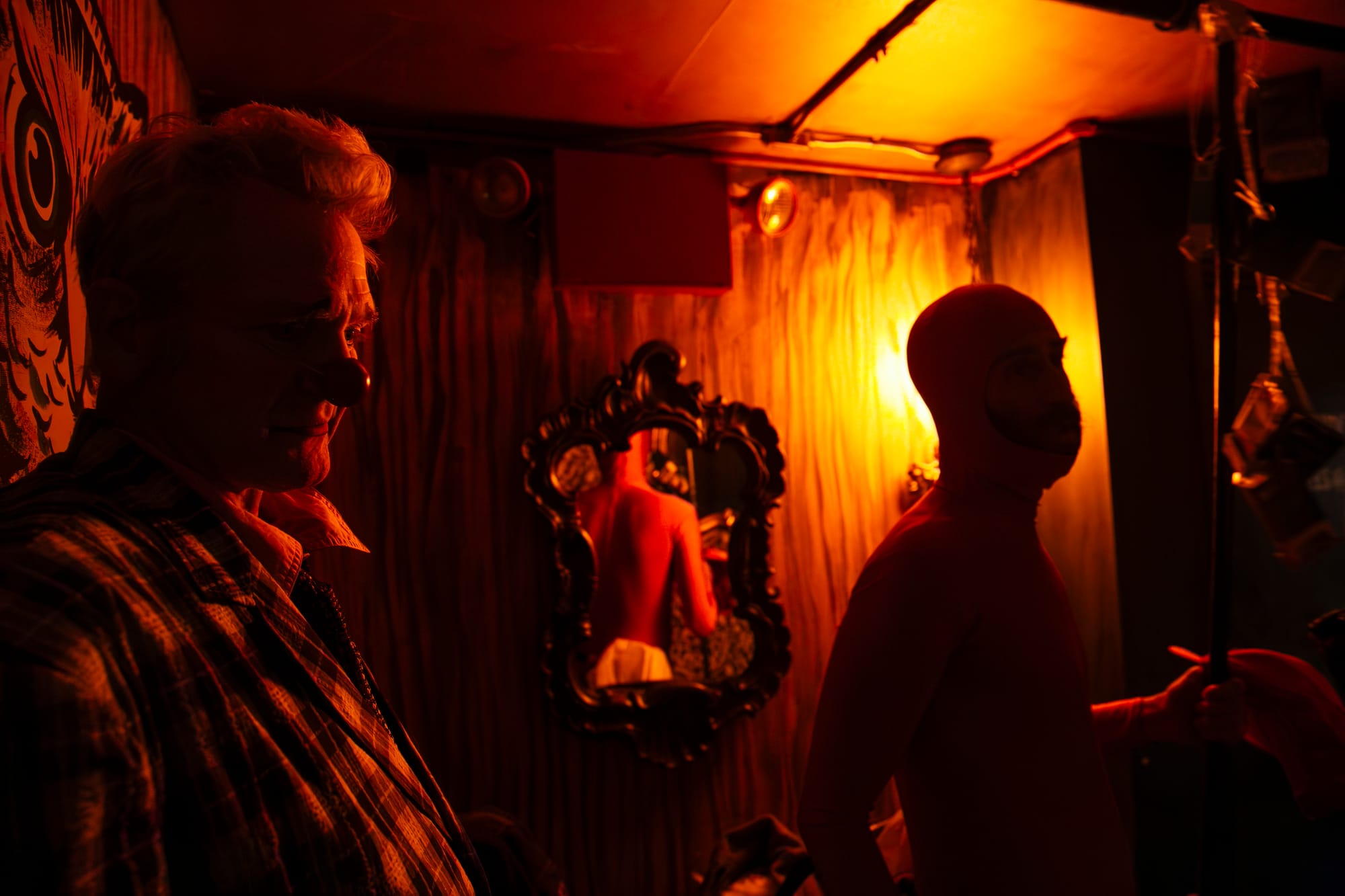
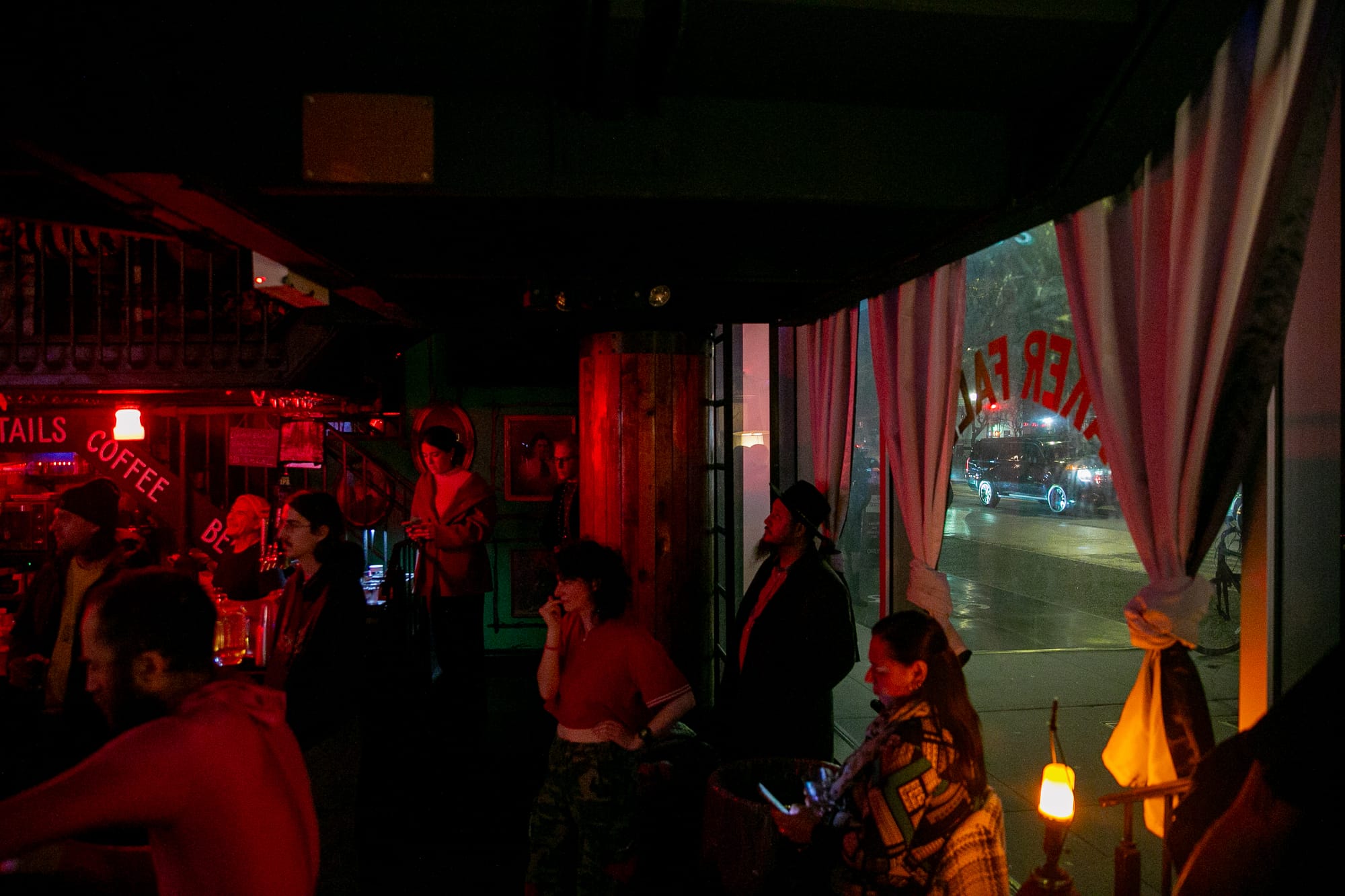
This project documents clowns and their props and rehearsal spaces in New York in the fall of 2025. The photos explore the surreality of practicing performance and indulging in art. I am asking what it means to have and explore creativity - queerness, weirdness, community, and play - while acknowledging that a community that gathers to exhibit their own freedom of expression is making an active choice and a prioritisation at every moment.
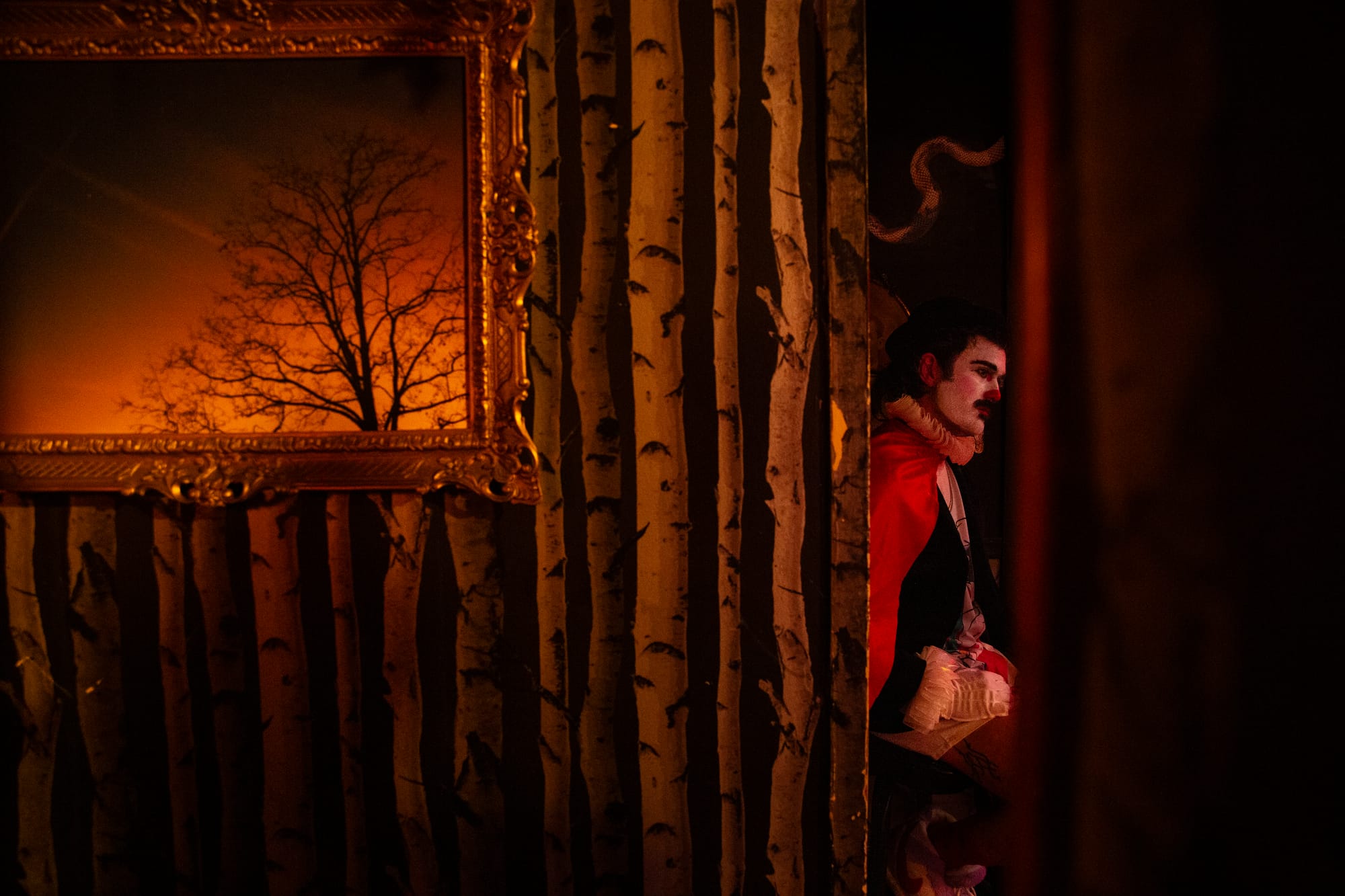
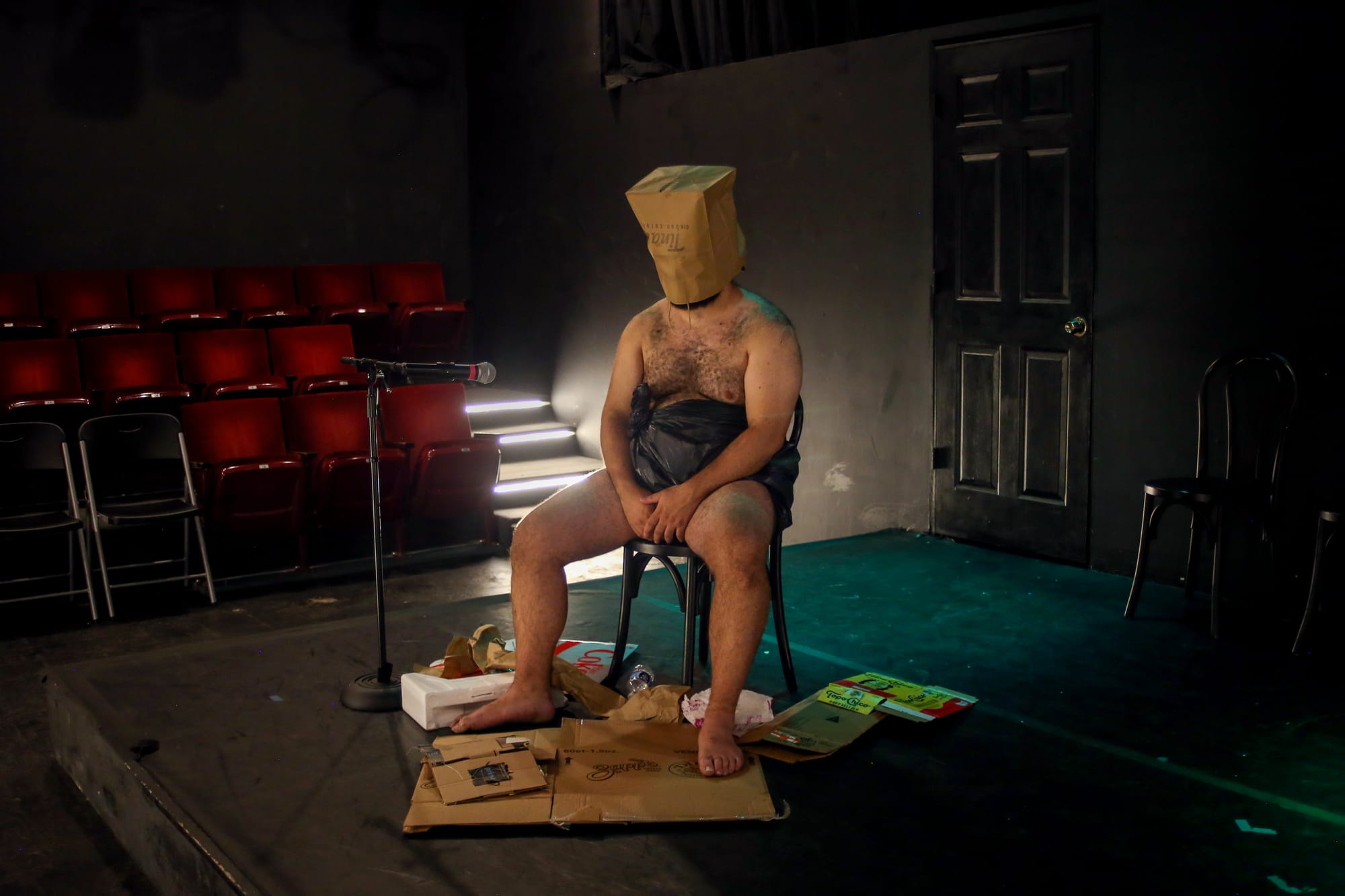
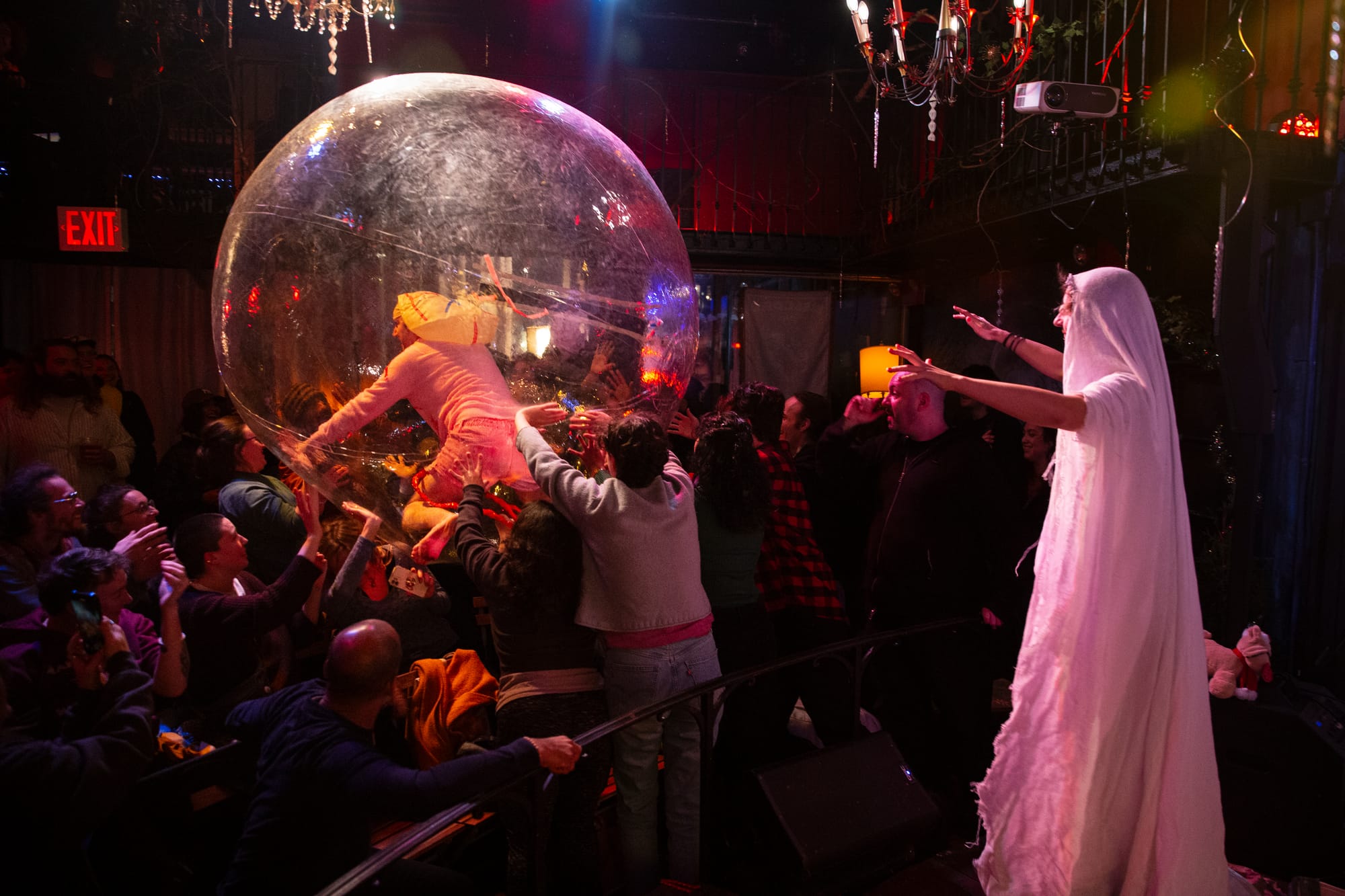
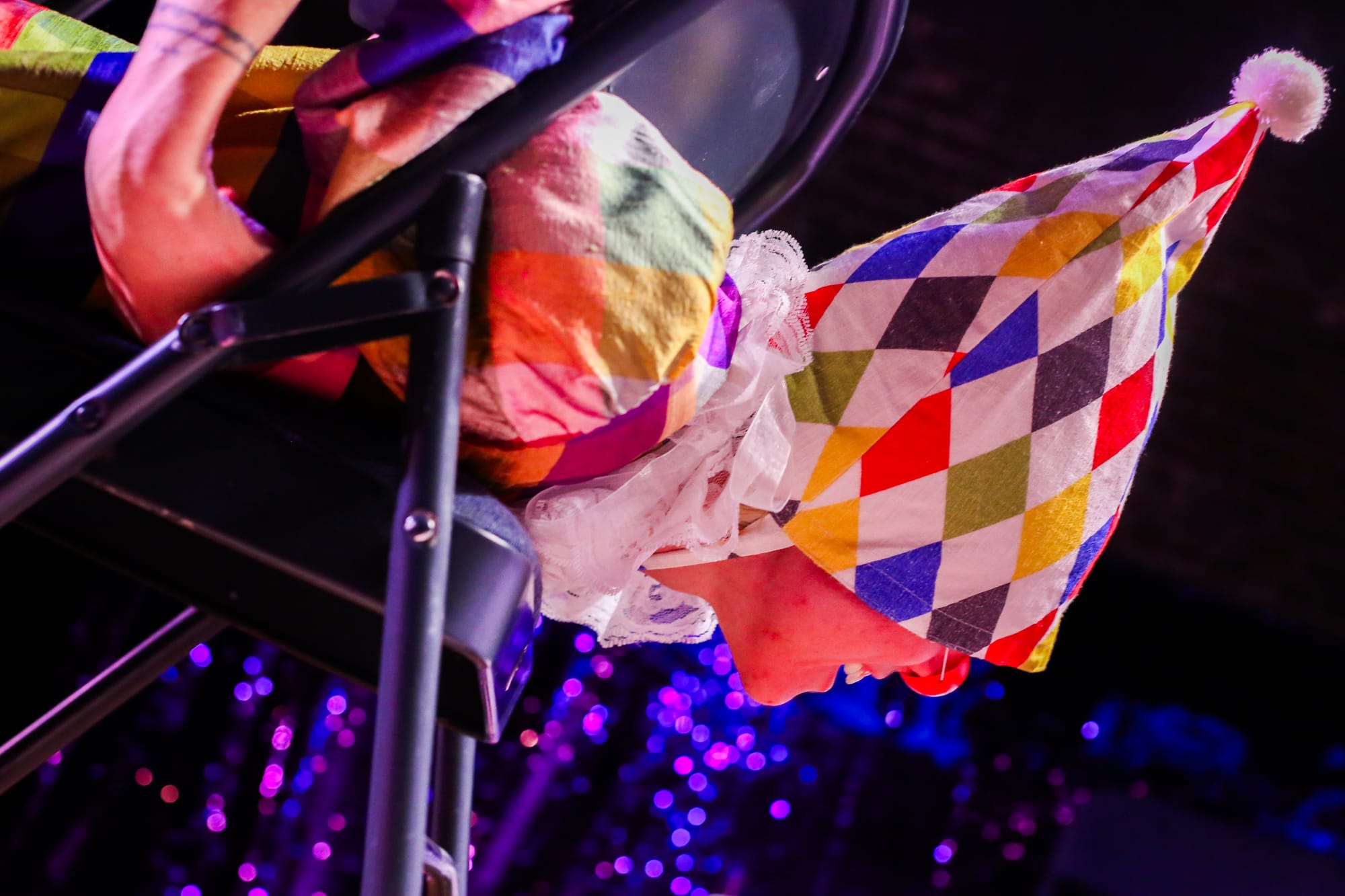
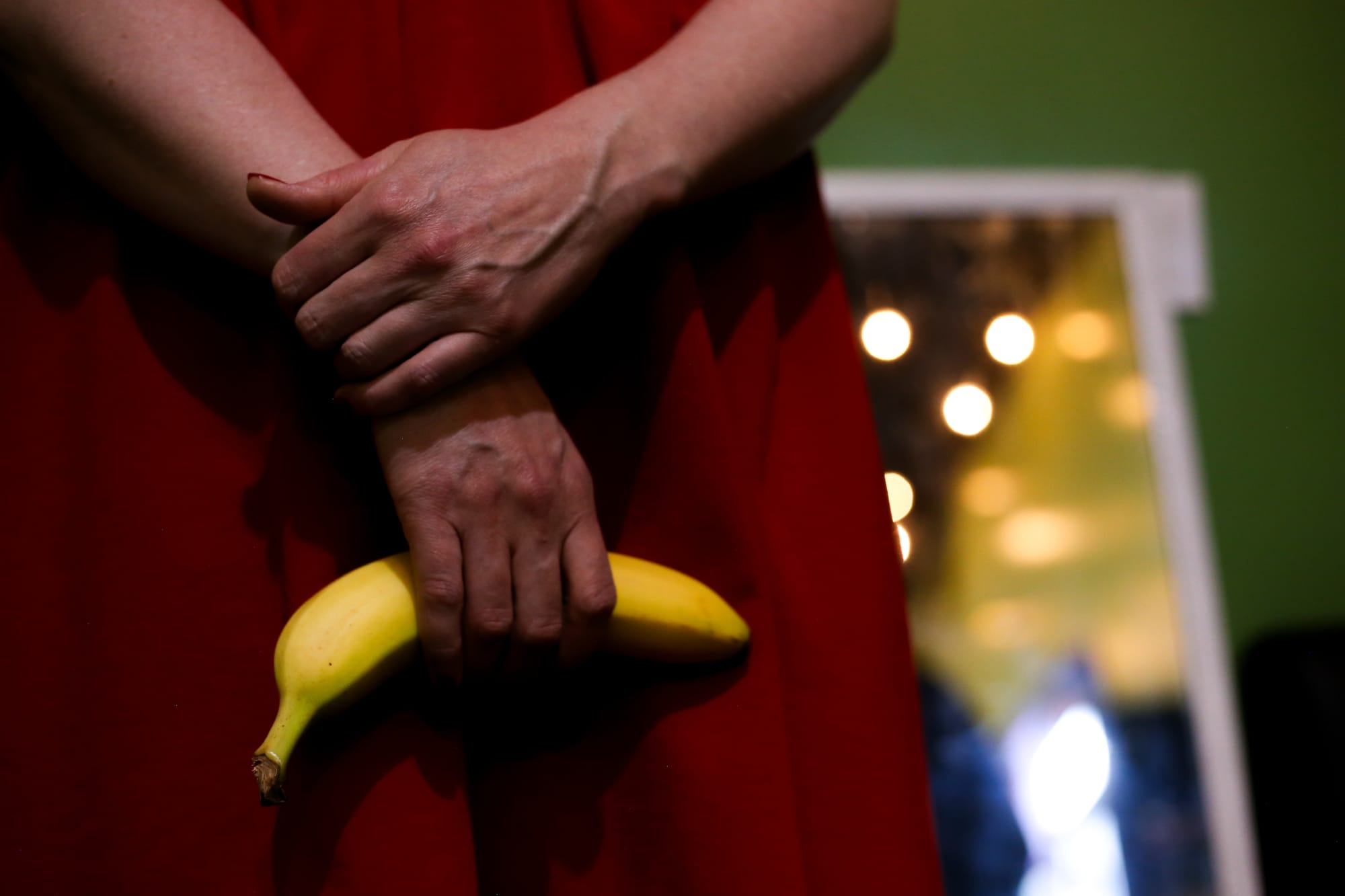
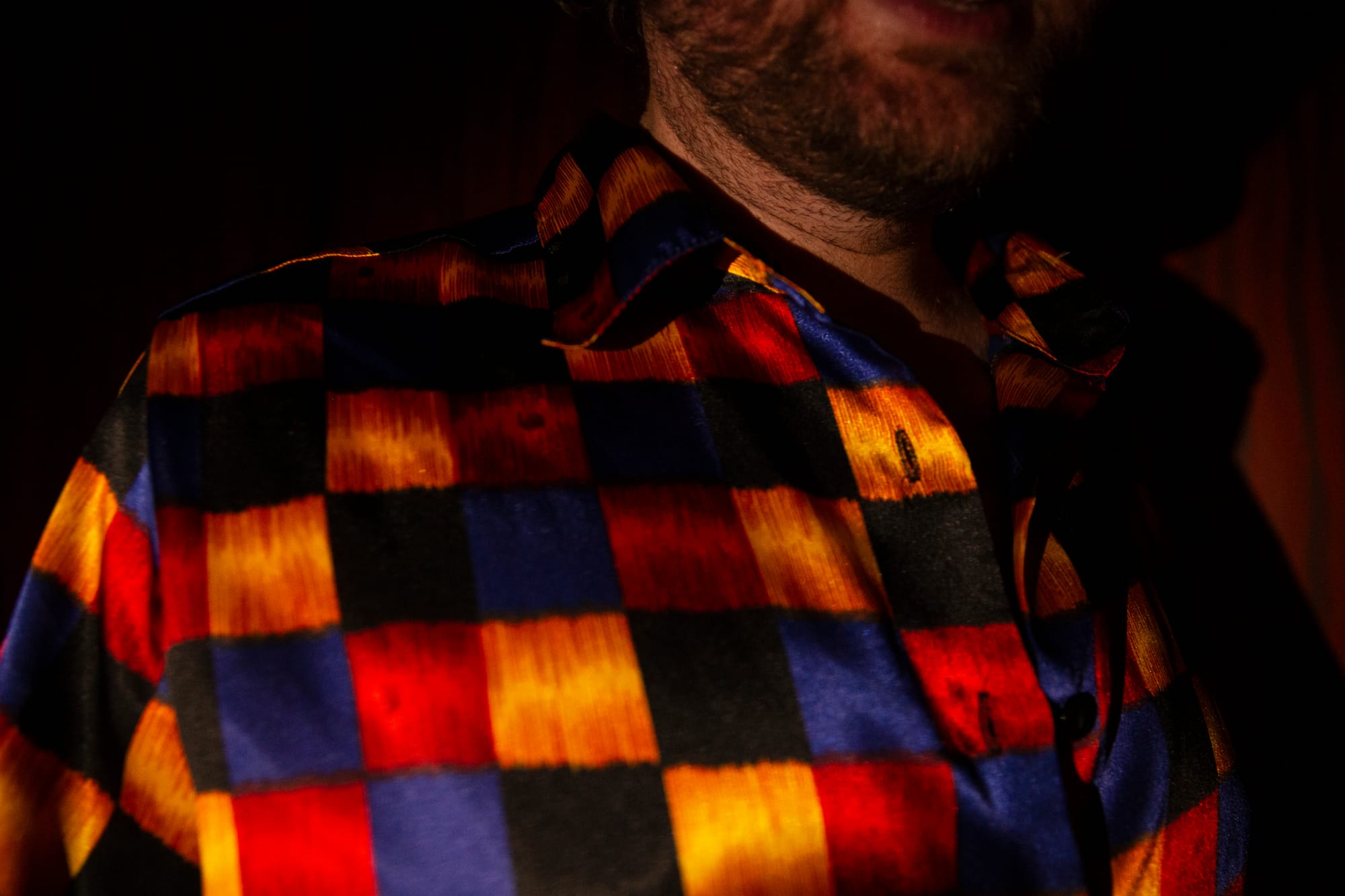
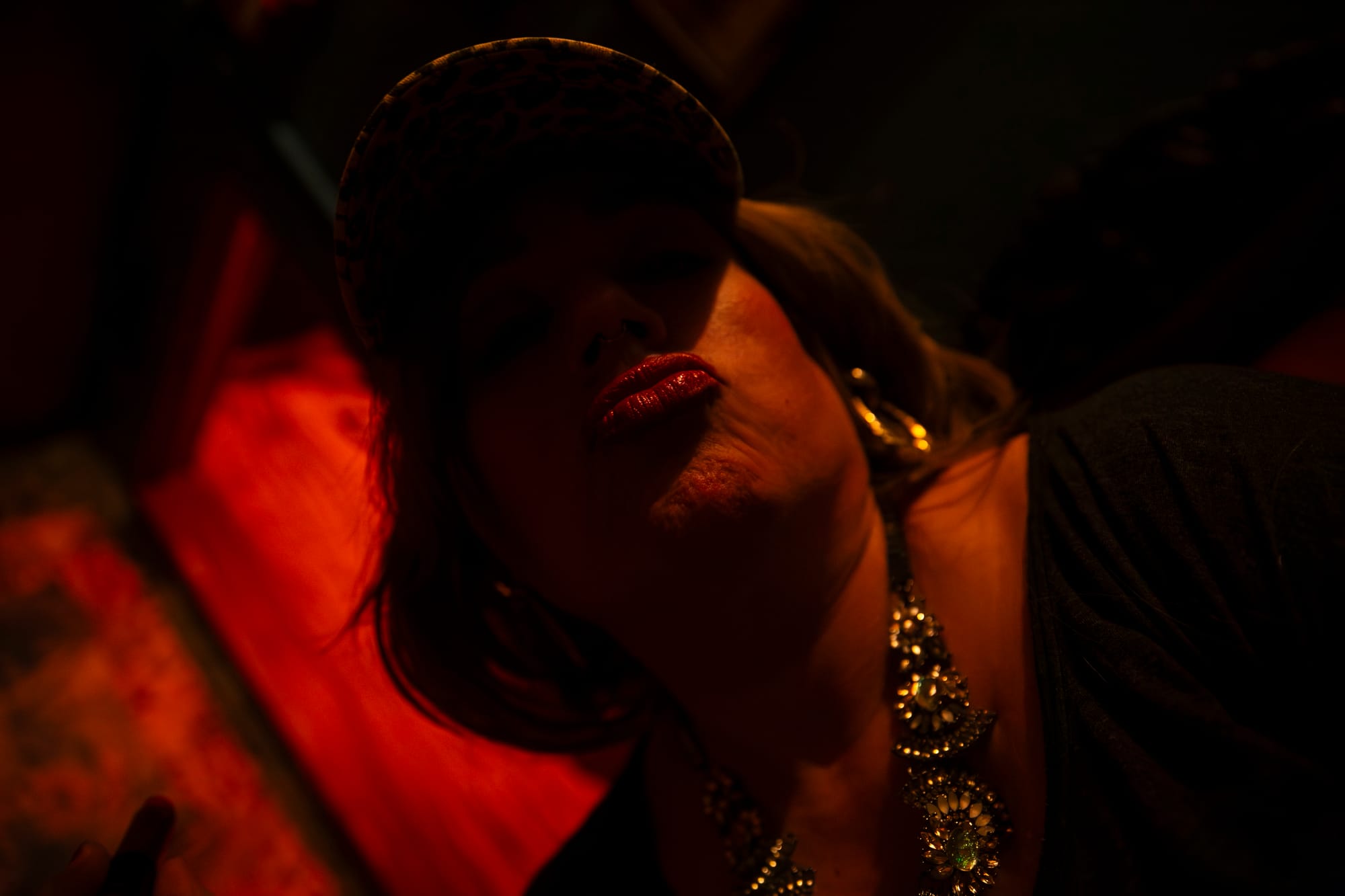
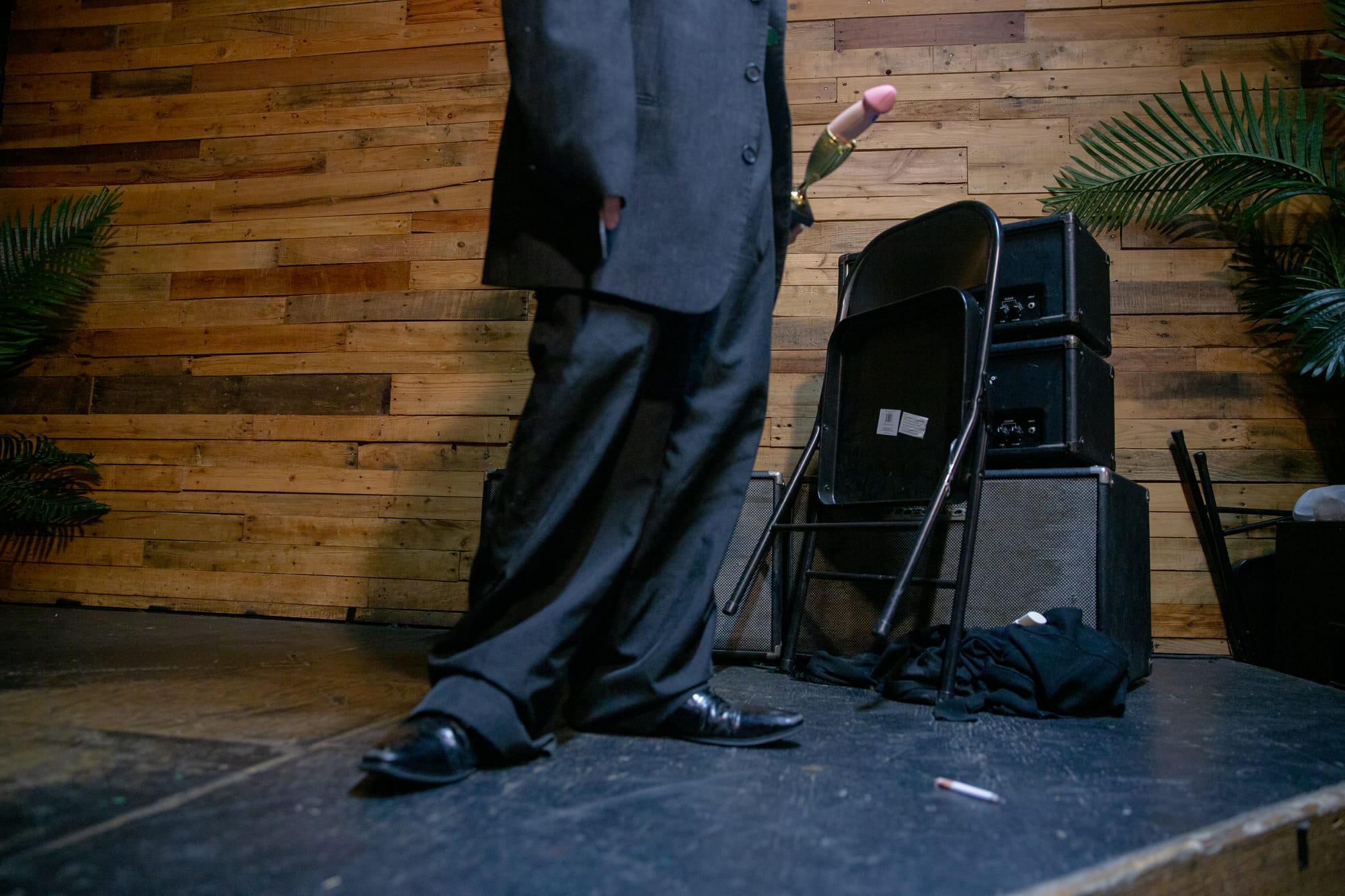
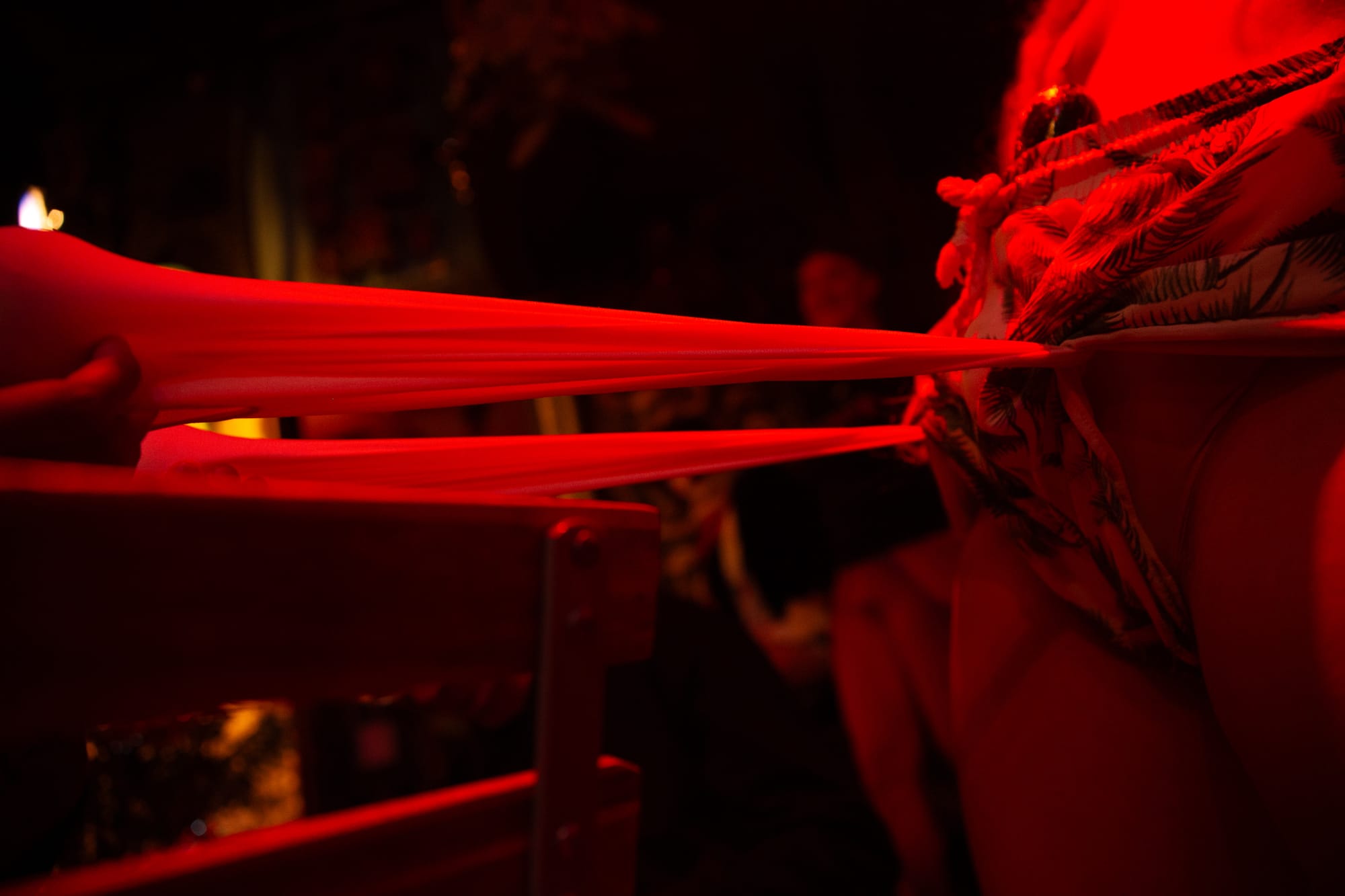
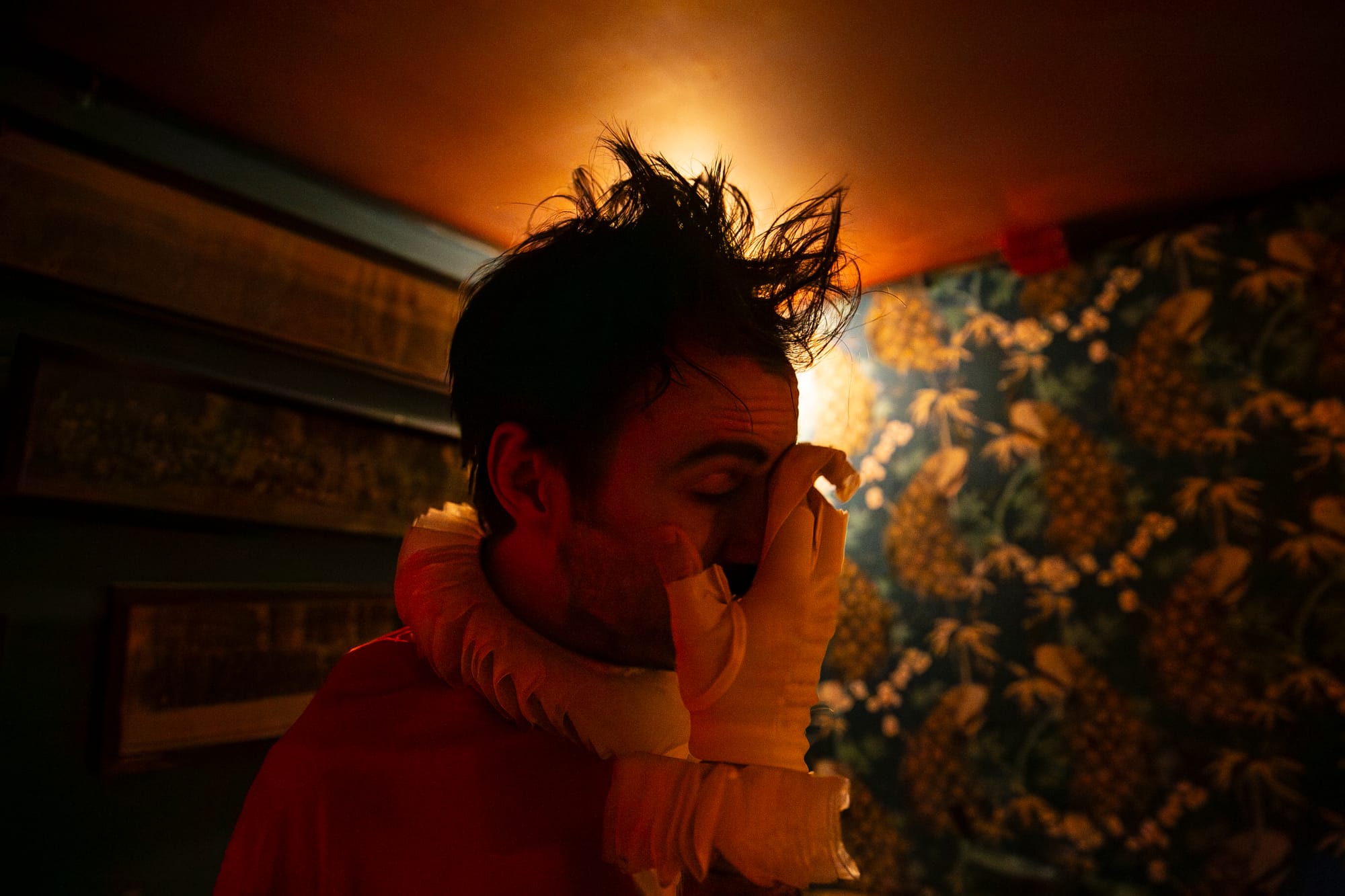
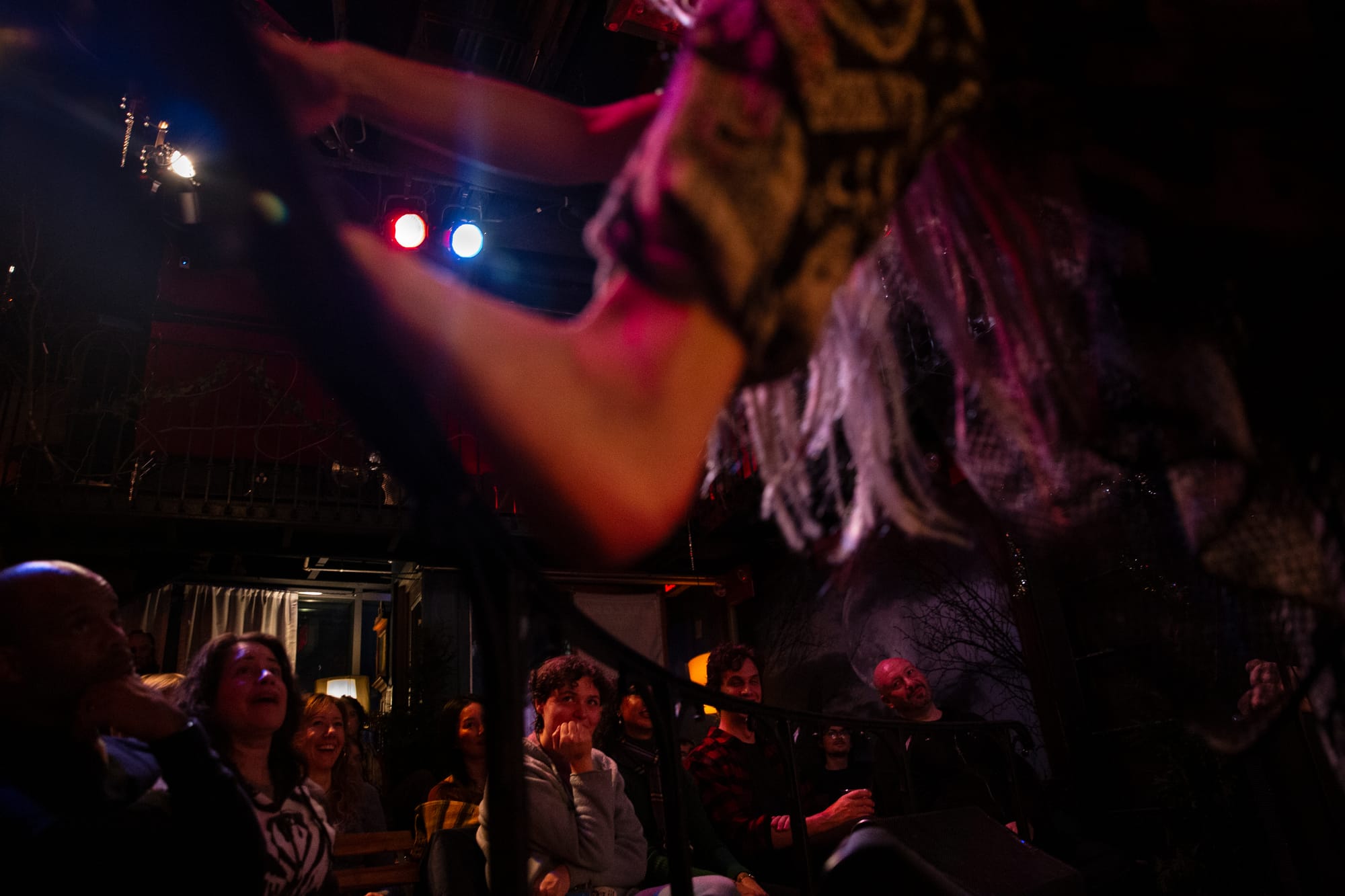
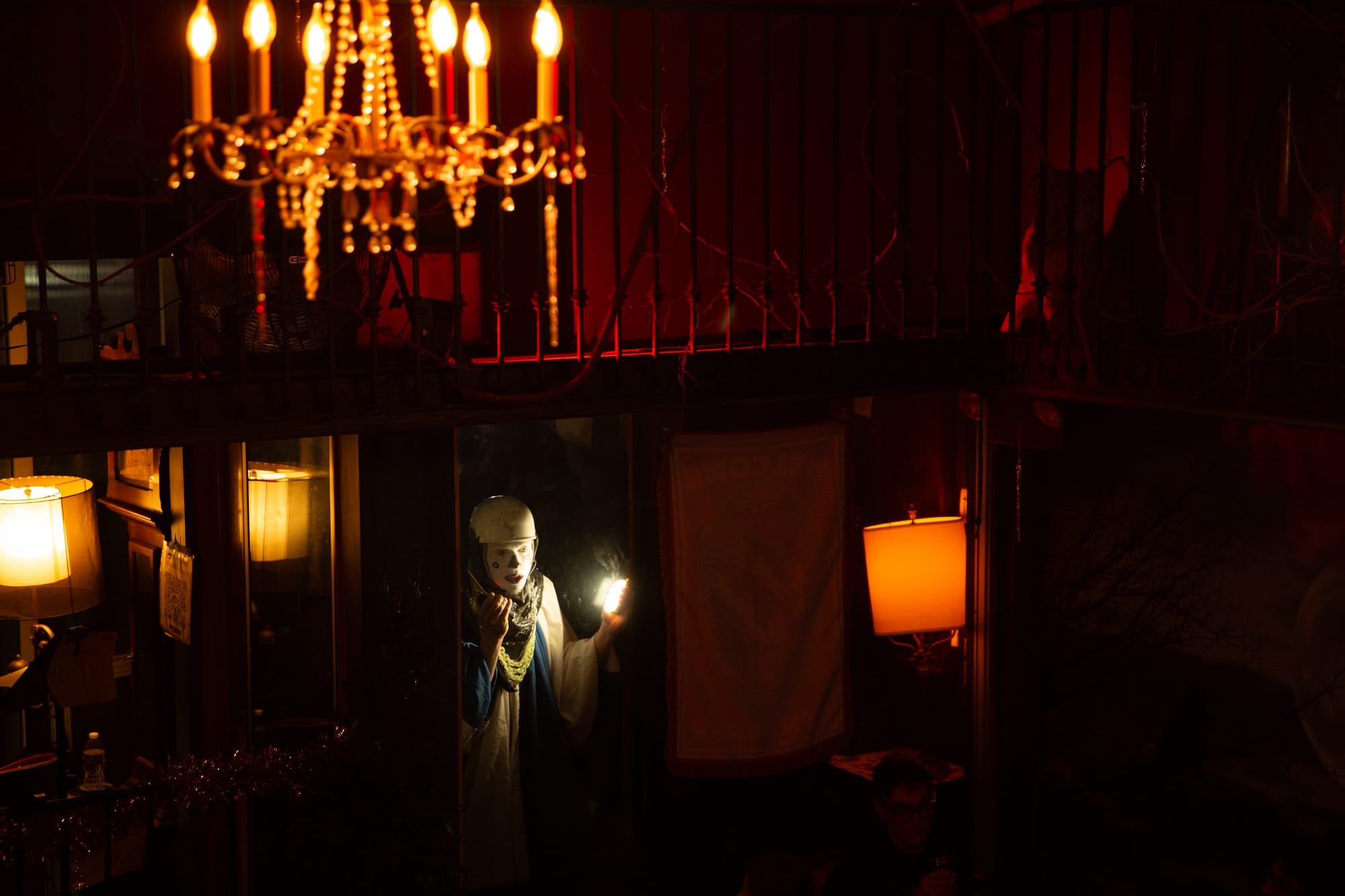
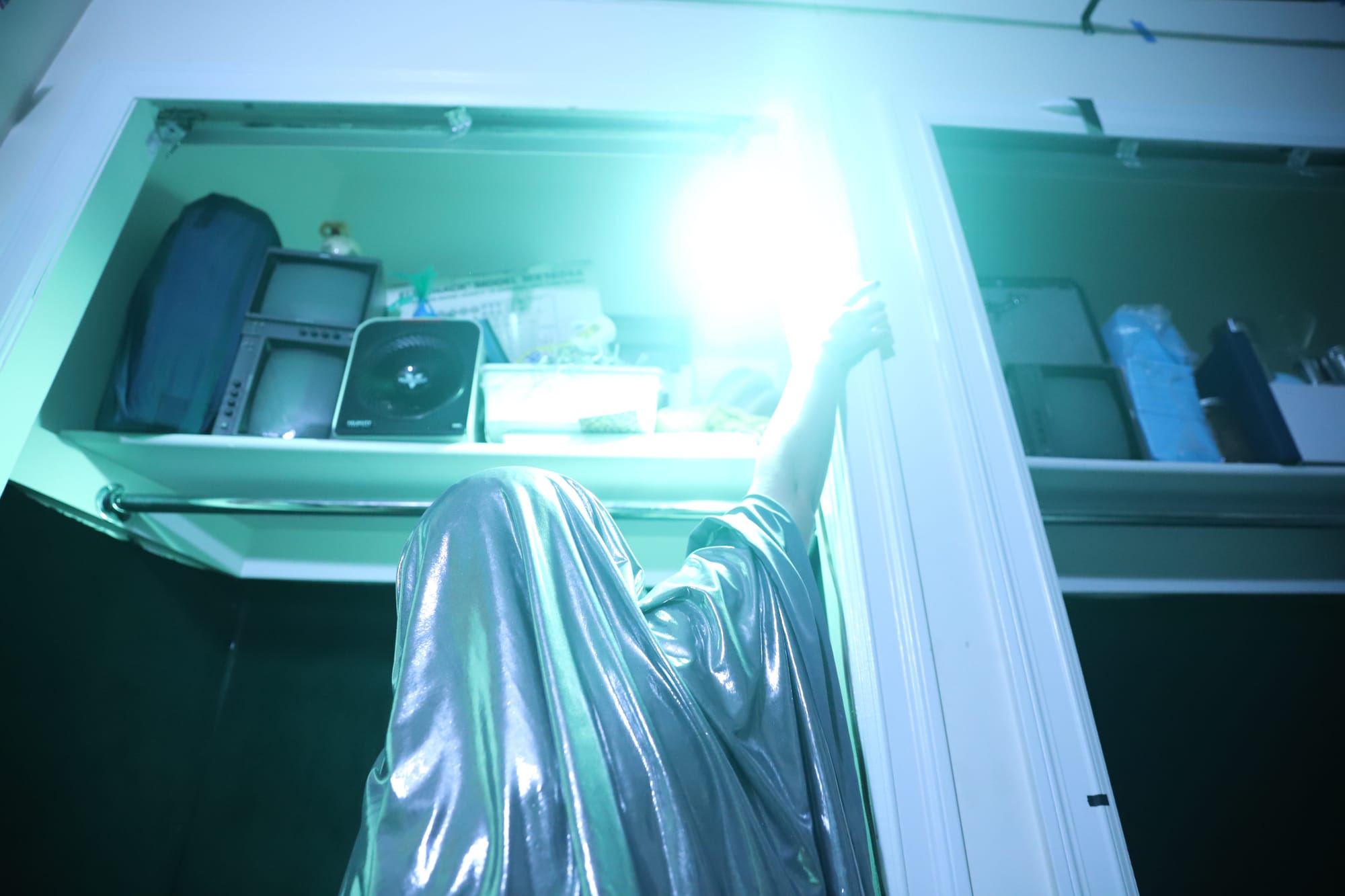
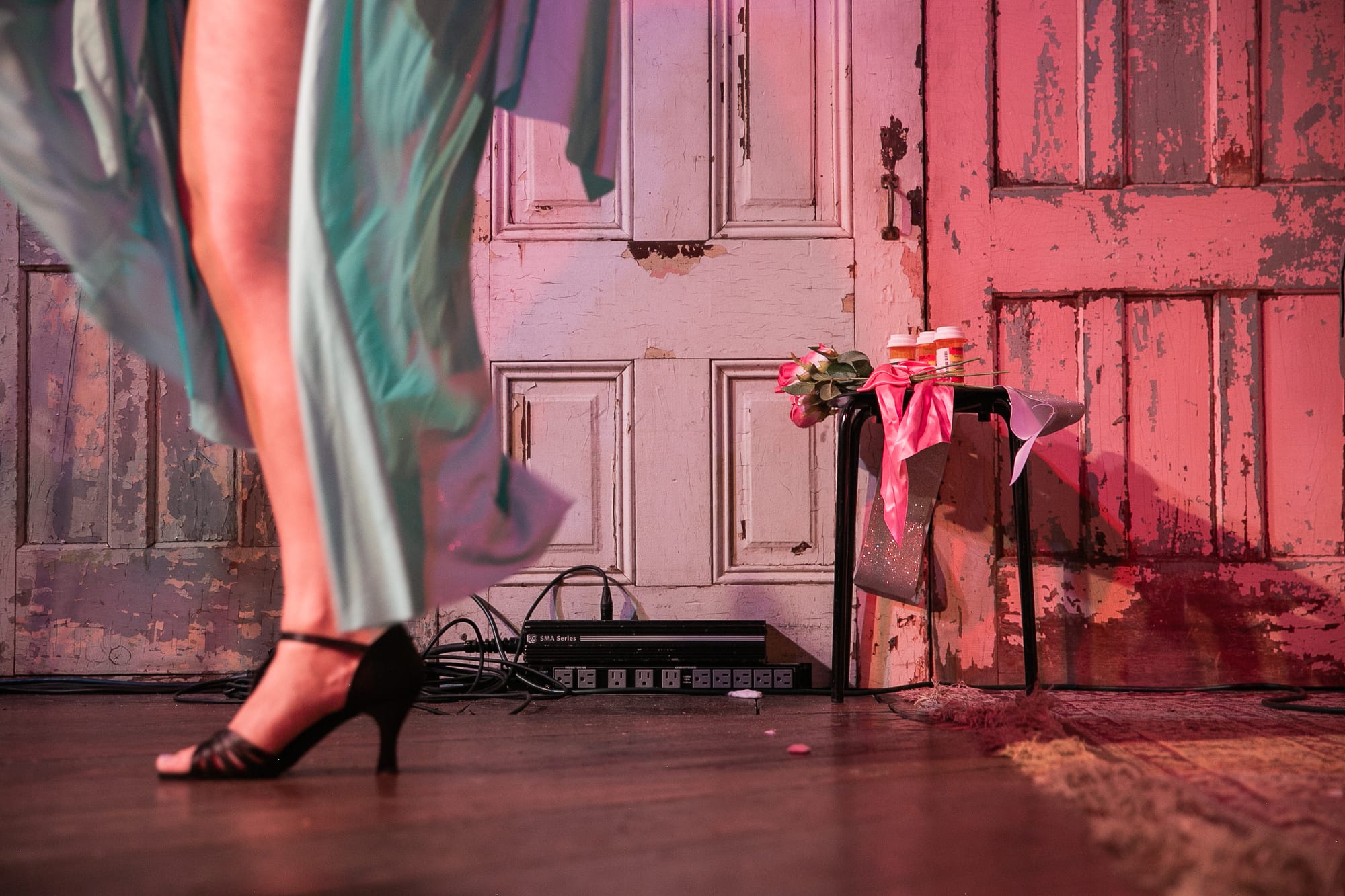
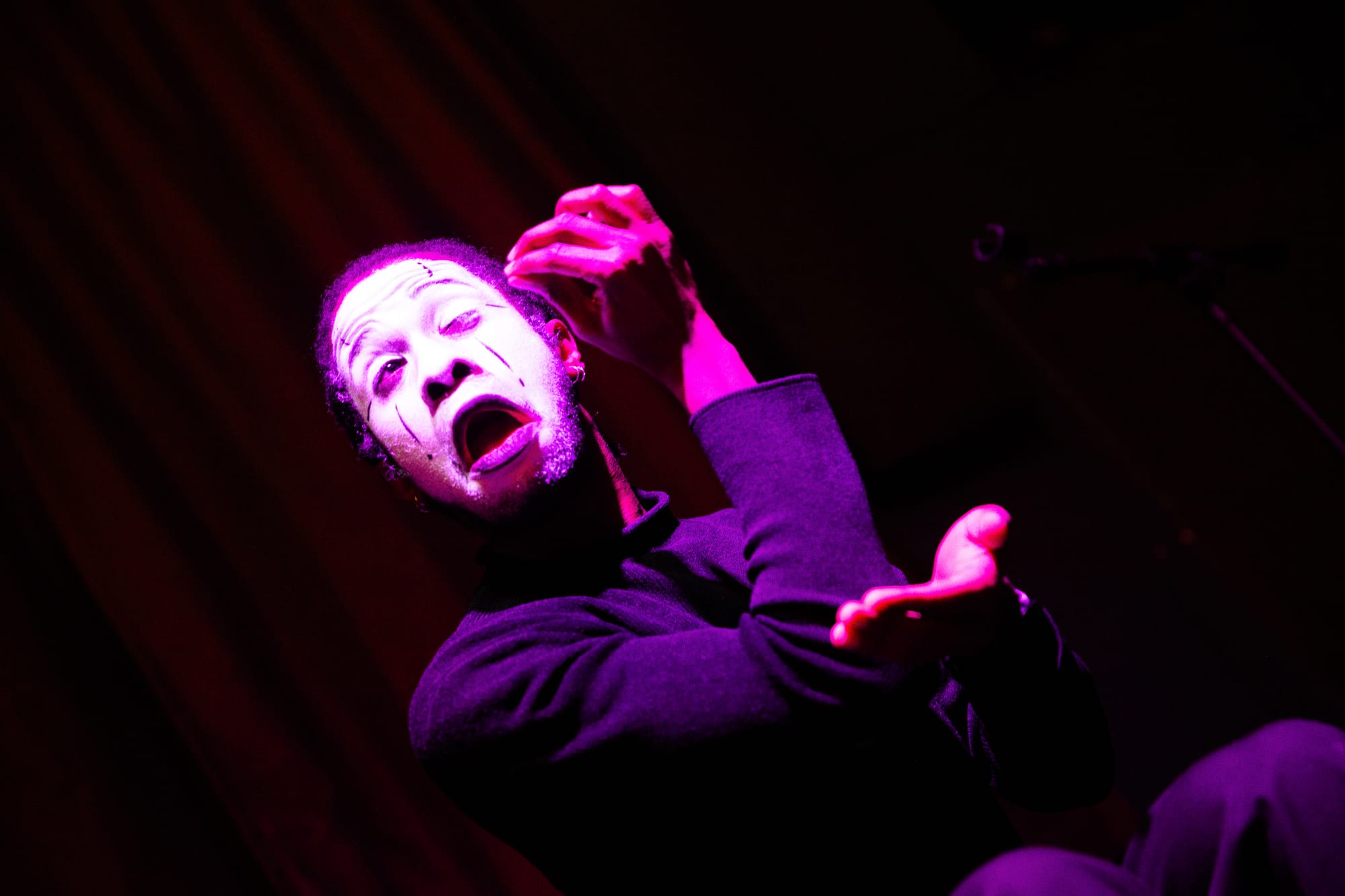
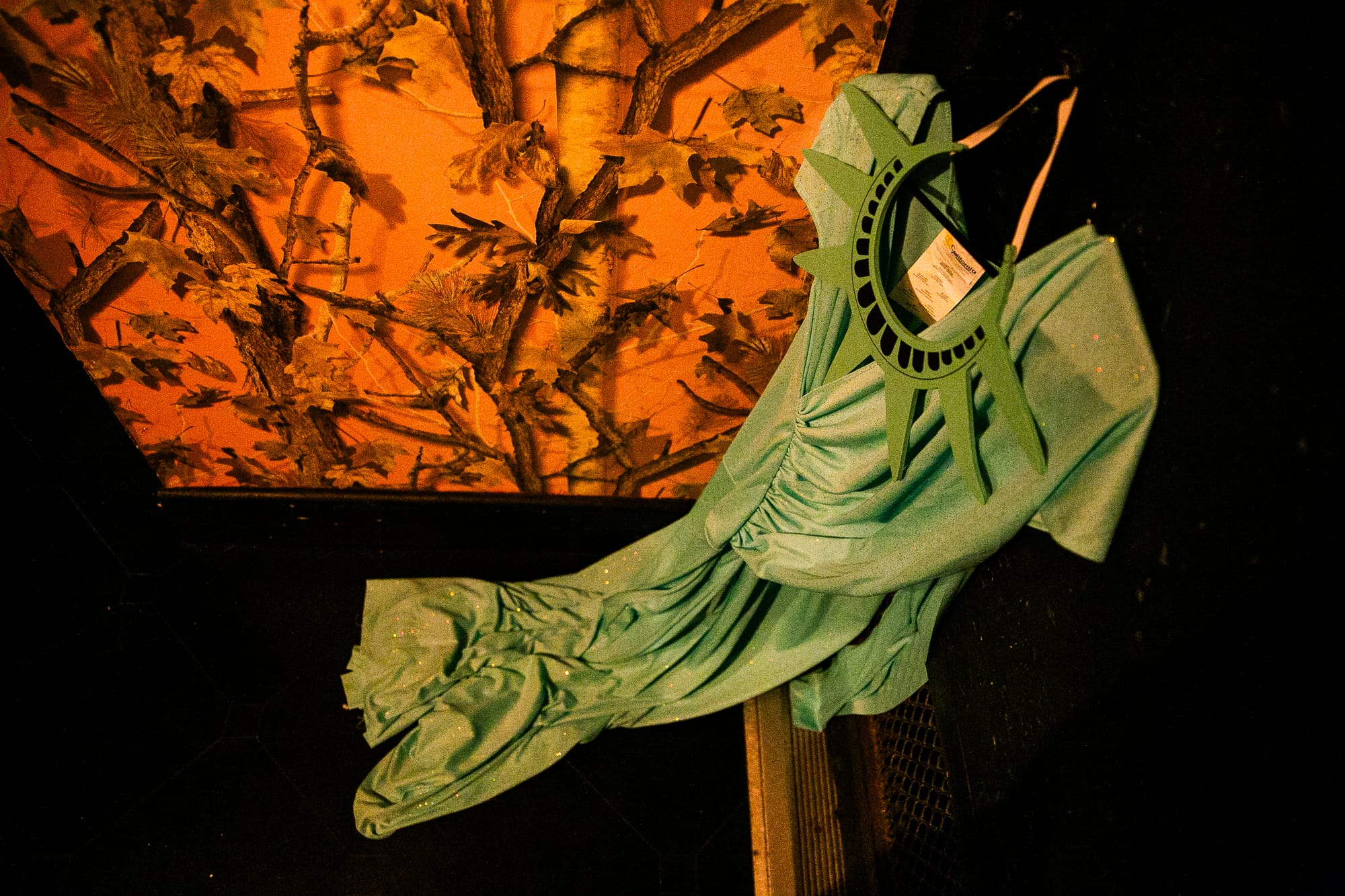
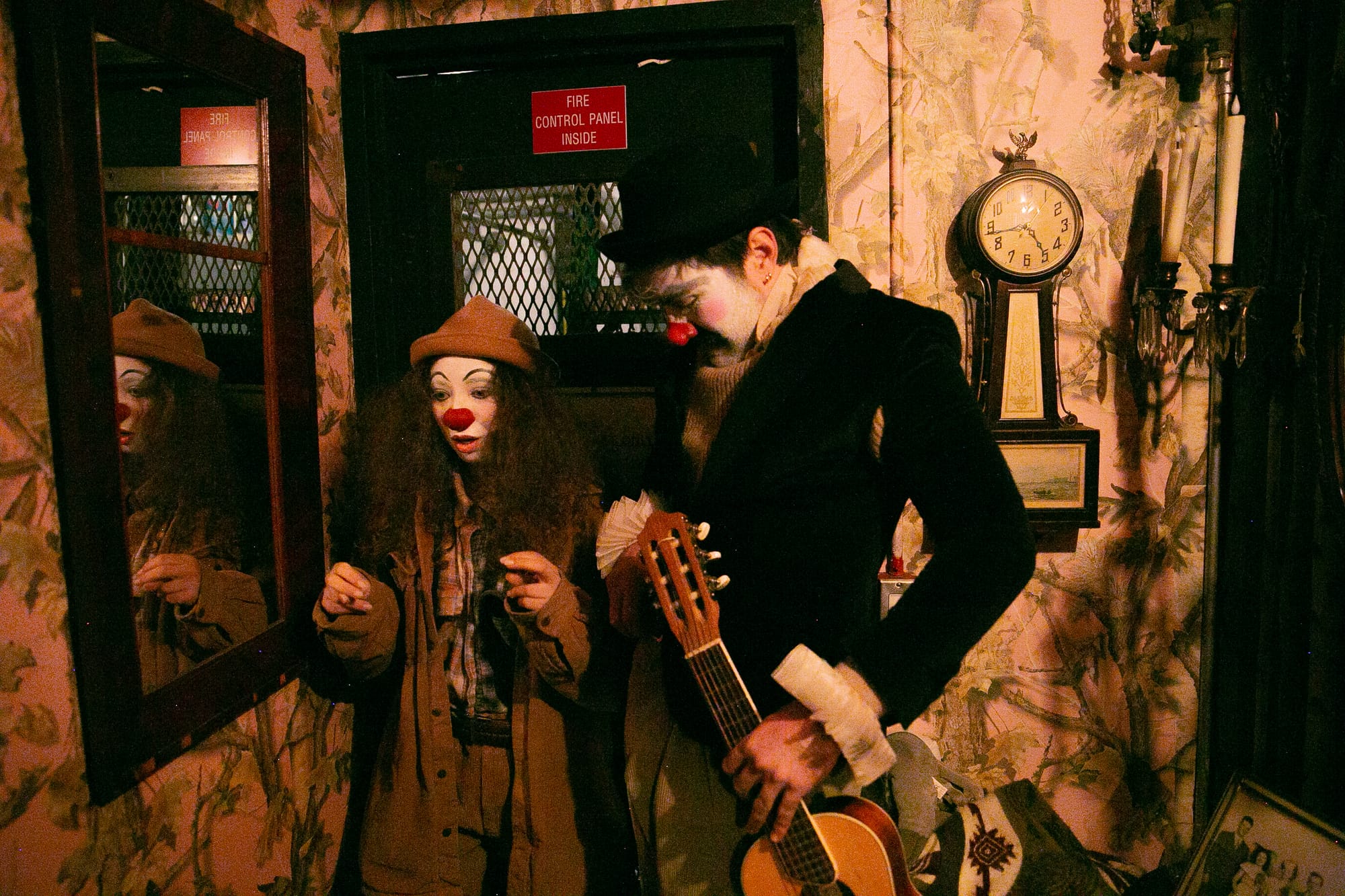
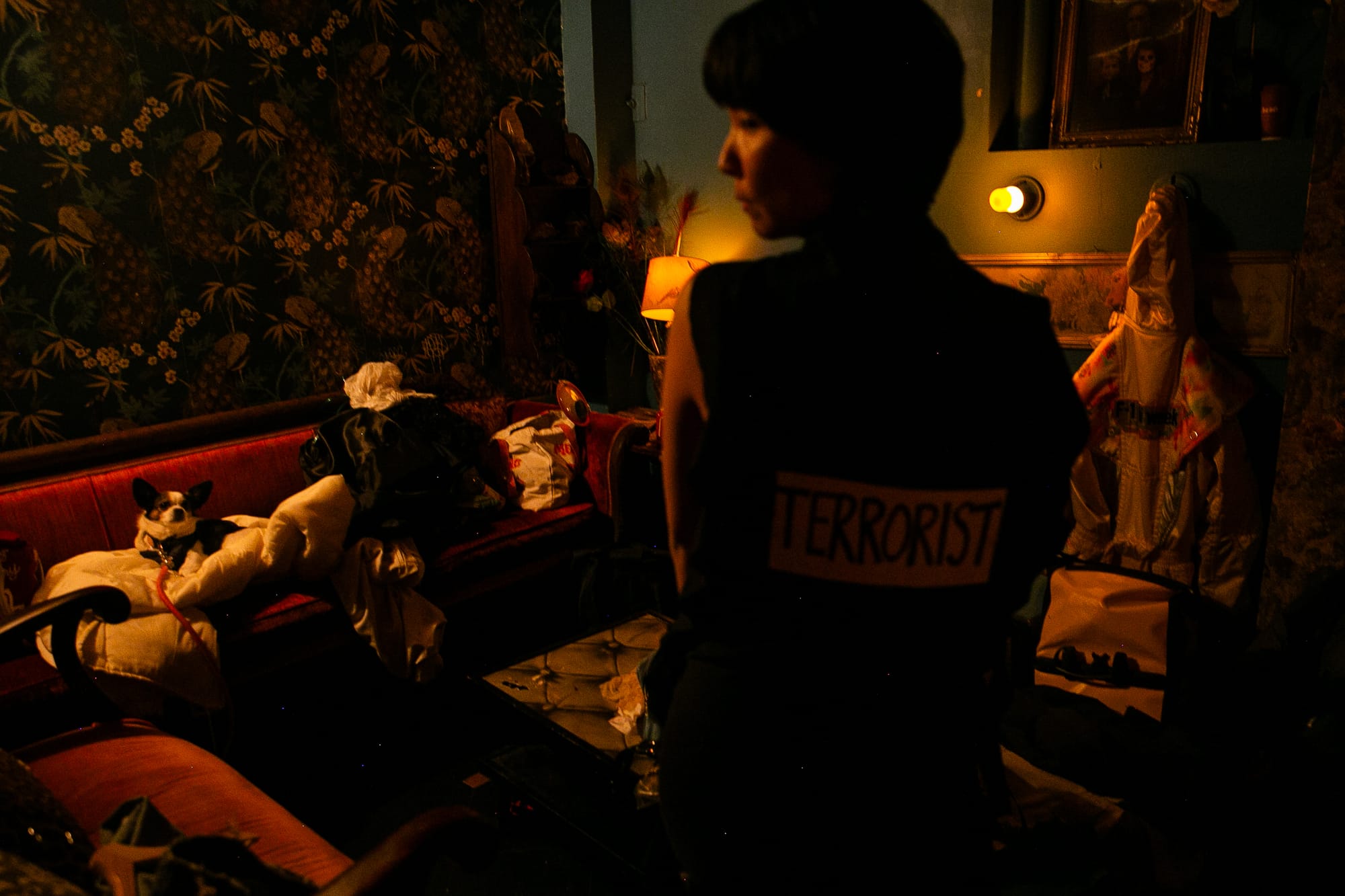
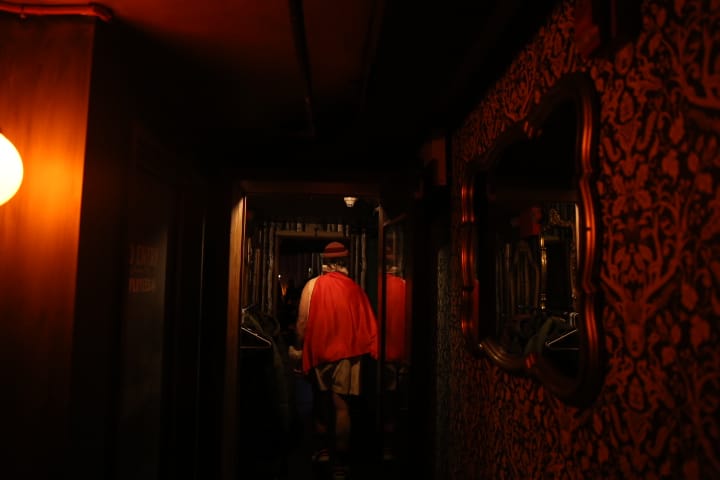
You’re probably the most familiar with Auguste clowns. They’re silly, stupid, round-faced and cute. They bump their heads and they trip over outsized feet, and make us all giggle with sweetness, misunderstandings of the familiar and familiarity with and willingness to entertain the confusing. The flower in the pocket and the bumbling presentation of it to a temporary beloved. Auguste clowns are named - possibly apocryphally - after a young boy employed in a theatre where a traditional, professional, classical, French, whiteface clown was working, a young boy who was so distracted and dazzled by the bright lights of the stage when he accidentally came out to sweep during that clown’s set, a young boy who waved out to the audience and made them laugh and was so enamoured with their attention, what he felt as their love, that he was eventually invited to be part of the show. Auguste is soft. When he’s screwing in the lightbulb, he holds it, and turns his whole body in a circle.
I snap a picture of an Auguste clown teacher during his class. This teacher has a bracelet that he wears all the time, that someone made for him at the clown summer camp where he works, where his parents met, and the bracelet says FOOL in capital letters across four white beads. He takes clown extremely seriously; it is a way of life for him, the only thing he believes in, and he tells a story of a little girl at the summer camp who is crying because she has drawn the short straw and has to wash the dishes, and he encourages all the little girls of the bunk to wash the dishes together while wearing their clown noses. And by the end all the dishes are clean and everyone is laughing. He says that we should find moments in our lives that can be lifted by the nose, or even by the idea of the nose.
I wasn’t meant to be taking pictures of clowns, but I had gotten a concussion and spent the summer lying on a balcony in Los Angeles while police helicopters hummed circles over the city, and decided that I would take a break from my first love (audio production), and do some photojournalism, so that I would spend less time on screens, less time trying to organise tape files. Back in New York and scrambling through the beginning of the J-school semester, I signed up for the clown class as a way to do literally anything that didn’t feel like I was straining to follow a story or a narrative or a lesson or a whiteboard, to have any form of social interaction where it didn’t feel like a thick film of TBI separated me from the other people in the room or the conversation. So I was in photo class, and I was in clown class; two decisions that followed an accident, and the accidental collision of the two things can only make me laugh. “I hit my head and now my thesis is clowns”? C’mon.
A Bouffon clown is grosser and meaner, more mocking - the word I’d like to use is French, mechant, meaning wicked - and you can think of a naughty squire, or a jester, or Cinderella’s evil stepsisters, or any random antagonistic high school guidance councillor, like one who doesn’t actually want you to get into a good college because she heard you making fun of her under your breath when she was substitute teaching your General Studies class one afternoon and she has held a grudge against you because you didn’t apologise humbly enough when you came back after being kicked out. Bouffon is sick and dirty. A Bouffon clown will ask you to smell something and then cackle and ask you to guess what it was and howl when you get it wrong. A Bouffon clown will offer you a flower and then when you reach out they will snap their hand away and scream that you are trying to hurt their baby.
As part of the project, I start going along to a different class, Sunday nights in a damp basement, where the teacher folds his long narrow limbs up in a vintage jumper and erupts prompts onto the people standing in front of him - be “transgender Santa Claus” or “a sexy puppy” or “ your own father telling your mother that he wants a different son” - and frequently mentions how much he’d like to fuck Timothee Chalamet. He studied clown in France twenty years ago and has been running this New York drop-in for about a decade, although that time is now coming to a close; I’m not sure if this is due to his undisclosed health problems, or the fact that he has recently been cast in a movie with Timothee Chalamet. He says he is planning to focus more on acting. Going to the class each week introduces me to a small pool of clowns who are involved in the scene, who show up, support each other’s progress and growth, go to each other’s shows, and encourage each other’s work over time.
My initial distaste for what I perceive to be the unnecessary transgressiveness of the Bouffon-ery is metered somewhat as I start to make friends with the regulars in the class and realise that I am being, frankly, bourgeois. The people who come to this space each week see me - with my brain injury and the attendant medically-diagnosed fifth-percentile attention span, wearing white snakeskin cowboy boots while lying on the floor with a camera - as completely pedestrian. These people are unruffled and that is because these people are weird. Bouffon makes sense to them. And seeing them love it, it begins to make sense to me.
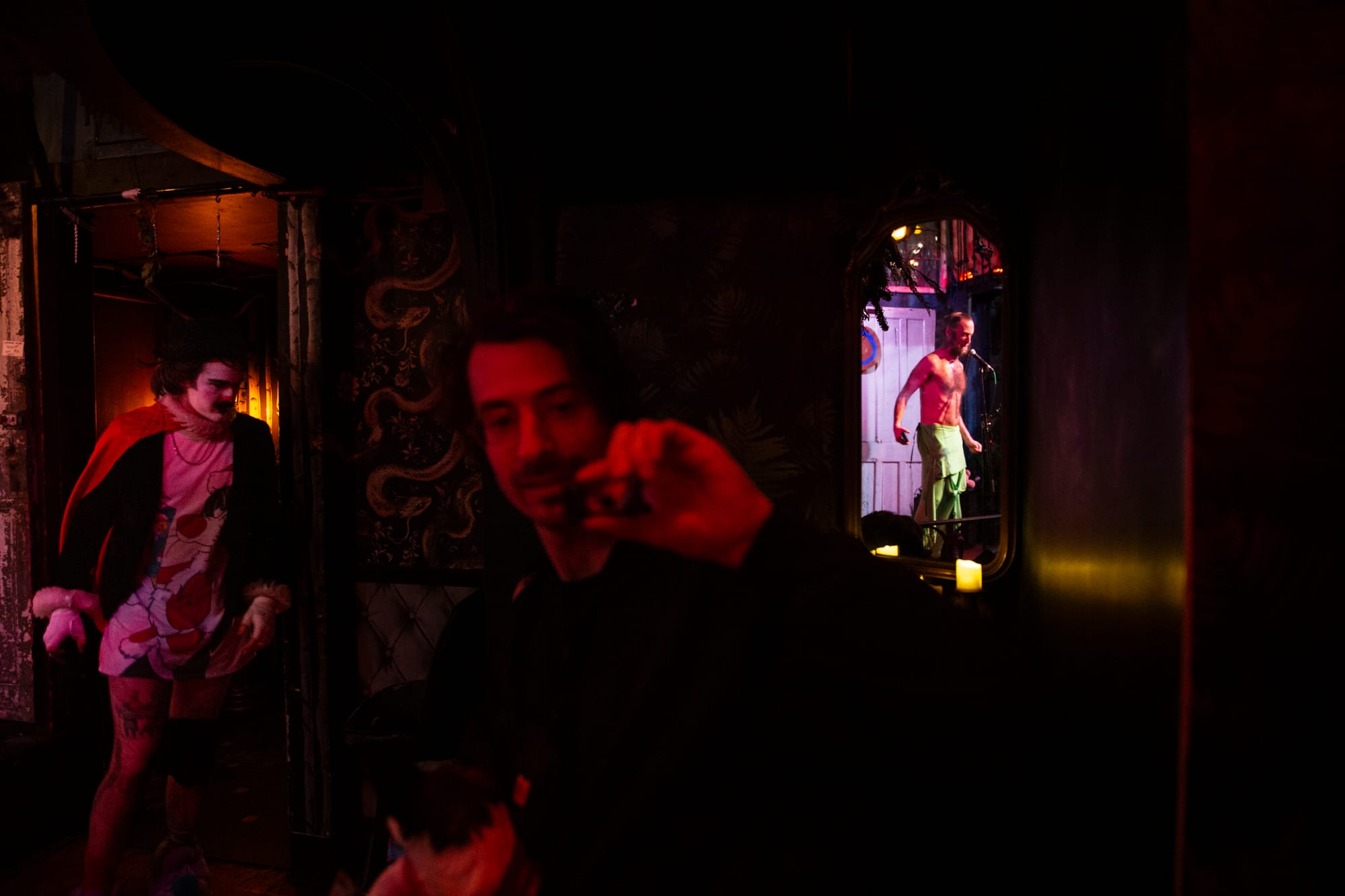
I go to more shows and take more pictures. The New York clowns know how to find their light. They like to be seen, and they are exhibitionists. They are used to having their photos taken - actors, comedians, performers. Someone tells me that the clown is just a kid who gets to stay up past their bedtime for as long as they keep the adults laughing at the dinner table. If Mom stops finding it funny, then the little clown has to go to bed. I ingratiate myself, and now I am allowed to stay at the shows as long as I keep the clowns posing in the dressing rooms.
The last week before graduation, my mom is in town. I invite her to come along with me to a show in the spare room of an apartment in Brooklyn, where the tenant/ artistic director of the apartment tells me that her parents “who have money” are paying the rent to allow her to have her own venue in the bedroom that had belonged to her ex-girlfriend, who, apparently, hadn’t understood that the purchase of renters insurance by those same aforementioned parents would require her, the partner without parental support, to depart from the apartment upon her unilateral dissolution of the romantic relationship. I whisper to my mom to “be cool”. But her face is so expressive during the performance, so earnestly and evidently feeling, so uncomfortably pained and so desperately supportive of this performer, that the clown in the small space can’t help but zero in on her for some crowd work. “Do you think it’s worth it?” the topless, sweaty clown asks my mother, who is smiling with all her teeth, not looking directly at the paint-smeared nipples mere feet from her nose. “Ultimately, I do,” she says. “Ultimately?” asks the clown. “Yes,” says mom. “Ultimately, it’s about connection.”